Home / Products / Granular Fertilizers / KynoPlus Pro®
KynoPlus Pro®
The Solution to Urea Volatility
KynoPlus Pro® is Kynoch's enhanced-efficiency urea solutions powered by Anvol. With two active ingredients,. Duramite and NBPT, it helps reduce nitrogen losses caused by volatilistion so more nitrogen remains available for plant uptake, improved efficiency, and better yield performance
Why KynoPlus Pro®
Kynoch introduced Kynoplus® as a step forward in protecting urea nitrogen. Now, we present KynoPlus Pro® - an imporved innovation delivering even greater benefits for farmers.
- Enhanced-efficiency urea solution
- Powered by Anvol
- Active ingredients: Duromite + NBPT
- More nitrogen available for plant uptake
- Better efficiency and profitability
- Registration number: M29s under Act 36 of 1947
Key Benefits
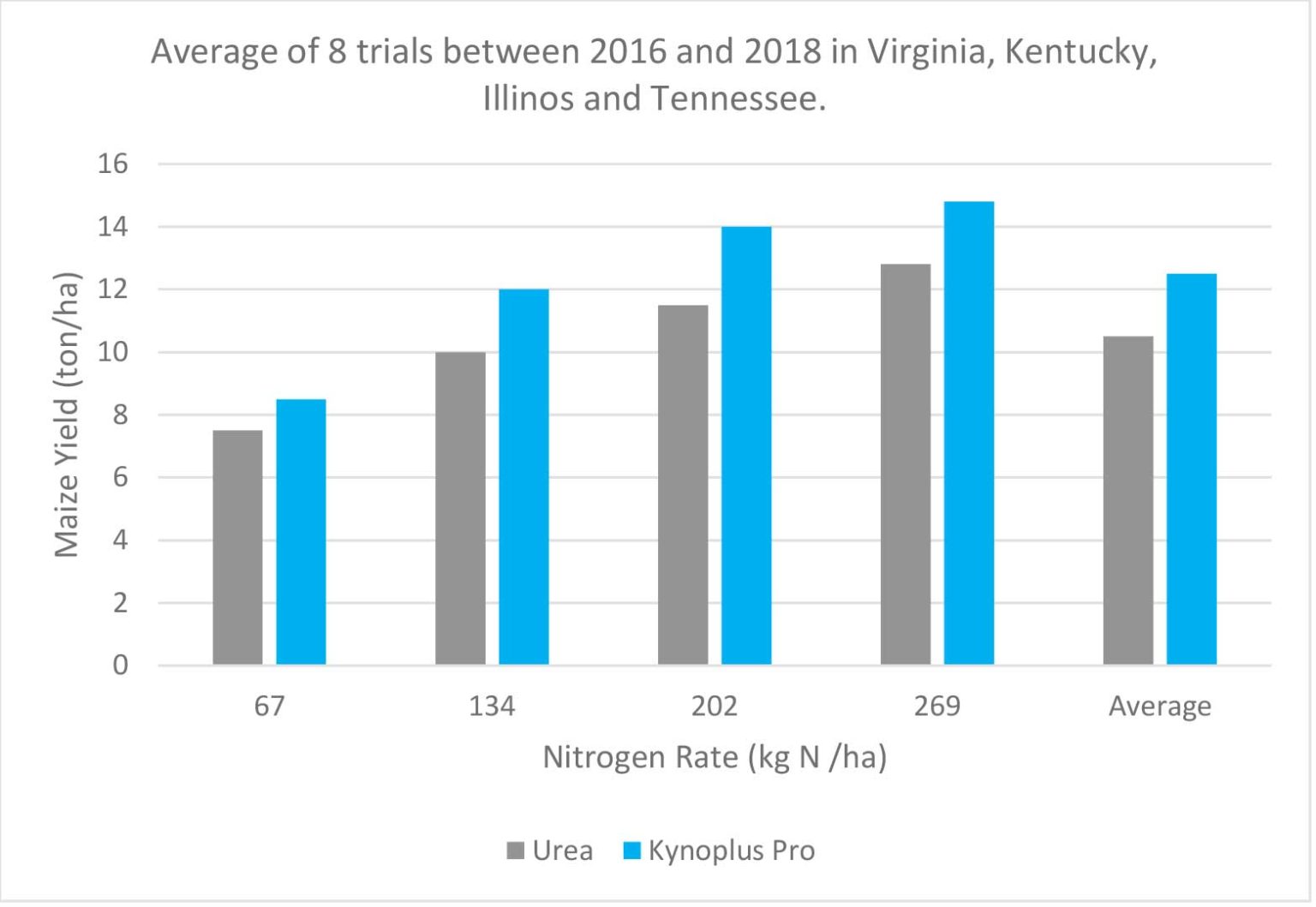
Extensive trials under diverse conditions confirm superior performance.
Reduces Volatilisation Losses
Improves Nitrogen Use Efficiency
More Nitrogen Available to Crops
Better Yields Across Crop Types
Works Across Various Conditions
Trusted Performance Every Season
Why Nitrogen Loss Matters
Every Kilogram of Lost
Nitrogen Costs You Yield
Urea is on of the most cost-effective nitrogen sources available, but a significant portion can be lost through volatilisation before crops can utilise it. These losses reduce nitrogen efficiency, increase input costs and limit yoeld potential.
Up to 79%
Reduction in volatilisation losses
Up to 78%
Reduced losses after 60 days + 3mm moisture
Up to 52%
Increase in urea rate
Up to 4%
Nitrogen losses in low-pH conditions
How KynoPlus Pro® Works
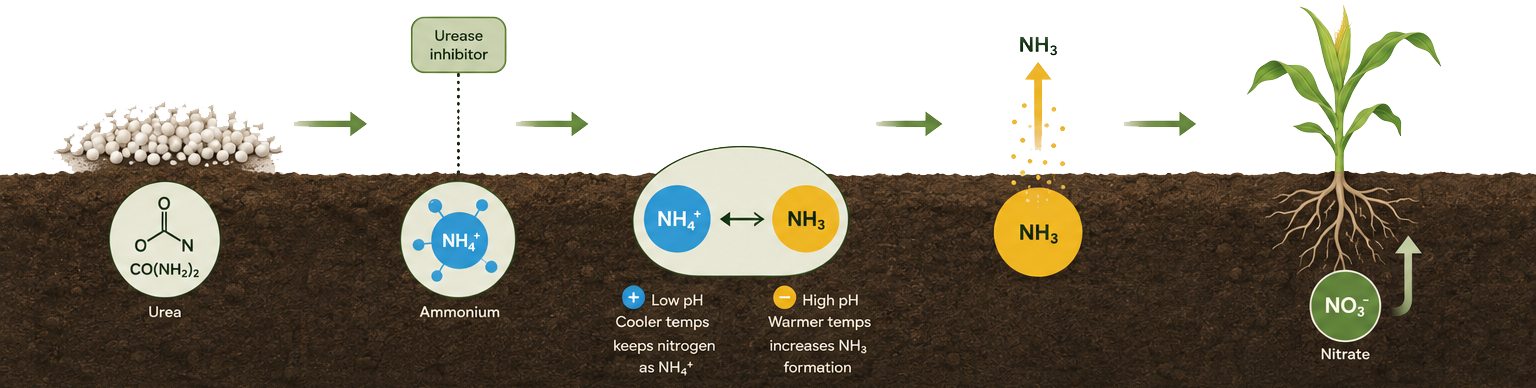
Advanced Dual-Action Protection
Duromide®
- Provide extended protection
- Improves nitrogen availability
- Supports long-term-nutrient efficiency
Urea Application
NBPT Protection
Reduced Volatilisation
Duromide Support
More Nitrogen Available
Better Yield Potential
NBPT
- Slows urease activity
- Delays conversion of urea
- Reduces volatilisation losses
Think Volatilisation isn't affecting your farm?
7 Common Myths. The Facts.
1. I have low pH soil, so volatilisation is less of a concern
Low pH does not prevent volatilisation
Research shows that urea volatilises even in low-pH soils. While higher pH levels accelerate the process, significant nitrogen losses still occur at low pH. Kynoplus Pro® reduces these losses to just 4%, ensuring more nitrogen remains available for plant uptake. (Federal University of Santa Maria, 2020)
2. We don’t experience extremely high temperatures
Temperature affects volatilisation
The higher the temperature, the greater the volatilisation. Tests conducted at 28°C and 38°C demonstrated that losses were significant even at 28°C. However, Kynoplus Pro® reduced these losses by up to 79%, ensuring efficient nitrogen utilisation, regardless of temperature. (Federal University of Santa Maria, 2021)
3. Fertiliser is applied to dry soil, so losses are minimal
Dry soil does not guarantee lower losses
There is a misconception that urea does not volatilise when applied to dry soil. Studies indicate that as little as 3mm of moisture can trigger the volatilisation process. In research trials, fertiliser was left on the soil surface for 60 days before receiving 3mm of moisture. Even after this period, Kynoplus Pro® reduced nitrogen losses by 78%. (Federal University of Santa Maria, 2024)
4. We irrigate immediately after application
Irrigation alone is not enough
Some farmers believe that irrigation completely prevents urea volatilisation. However, tests show that even with 10mm of irrigation, significant nitrogen losses still occur. Kynoplus Pro® provides more effective protection against these losses. (Federal University of Santa Maria, 2022)
5. Fertiliser is incorporated into the soil
Incorporation does not always prevent losses
While some assume that incorporating urea into the soil eliminates volatilisation, research reveals that even with 5cm of tillage, considerable nitrogen losses still take place. Kynoplus Pro® further minimises these losses, making more nitrogen available for plant uptake. (Federal University of Santa Maria, 2022)
6. I simply apply more fertiliser to compensate
More urea is not the solution
A common misconception is that higher urea applications can compensate for losses. However, research shows that increased concentrations accelerate the volatilisation process, leading to even greater nitrogen losses. In trials, losses increased from 36% at 30kg N/ha to 52% at 150kg N/ha. With Kynoplus Pro®, you can reduce nitrogen losses and improve yield efficiency. (Zheng et al., 2018, Biology and Fertility of Soils, 54: 411-422)
7. I use ammonium nitrate instead
Enhanced nitrogen uptake and higher yields
Trials indicate that plants absorb higher nitrogen levels when Kynoplus Pro® is used compared to other nitrogen sources. This leads to improved crop nutrition and ultimately higher yields for farmers. (Otto et al., Foundation for Agricultural and Forestry Studies and Research, 2022)